
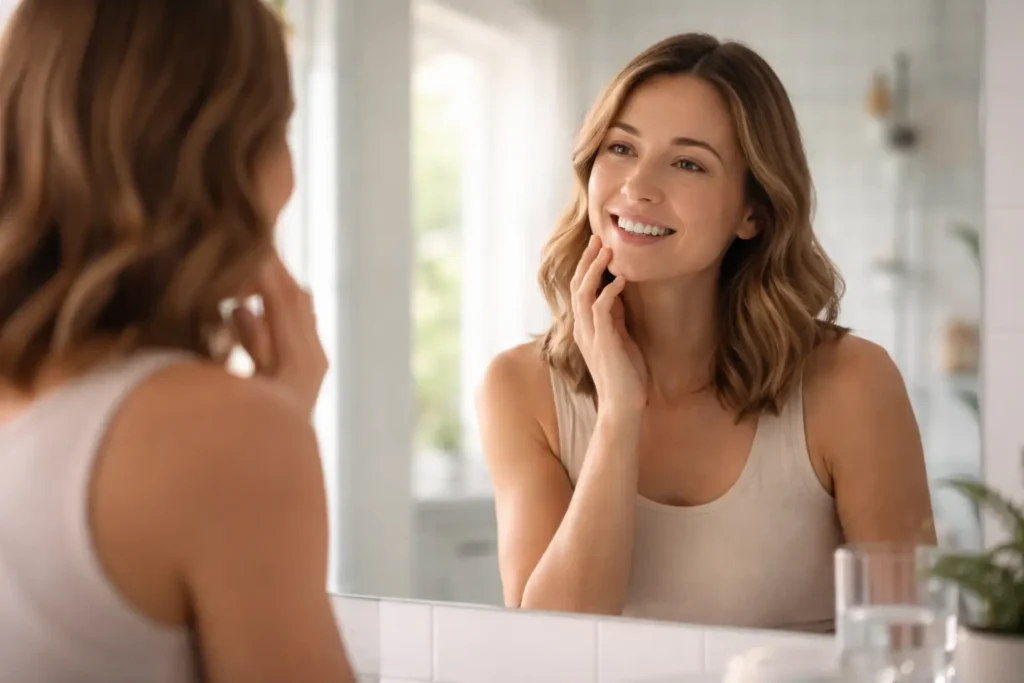
We see you. You’re standing in front of the mirror, thinking about a brighter smile. ✨ But then, a little voice of doubt creeps in. You’ve heard whispers and warnings online, maybe from a friend, and now you’re asking the big question that brought you here: is teeth whitening bad for your enamel?
And honestly? That worry makes perfect sense. Your teeth aren’t like a shirt you can replace if you “ruin” them. They’re yours for life. So the idea of whitening and accidentally doing something permanent can feel… really uncomfortable. 💬
A lot of people end up stuck right here—wanting that boost of confidence, but scared they’ll trade short-term results for long-term damage. If that’s you, you’re not being “paranoid.” You’re being careful. And being careful is a good sign. 😊
We’re here to turn down the noise and have a calm, clear conversation. Our team spends its time digging into the science and translating it into plain English, so you can feel empowered, not overwhelmed. We’re not dentists, but we are dedicated researchers committed to giving you the honest, straightforward information you deserve.
So, let’s walk through this together. We’ll explore what enamel is, how whitening actually works, and how you can achieve that radiant smile while keeping your teeth healthy and strong for years to come. 💙
First, What Exactly Is Tooth Enamel?
Before we can talk about protecting it, let’s get friendly with your enamel. Think of tooth enamel as the superhero cape for your teeth. 🦷 It’s the hard, translucent outer layer that covers the visible part of each tooth. It’s actually the hardest substance in the entire human body—stronger than bone!
That sounds reassuring (and it is), but it’s also where people get confused. They hear “hardest substance” and think it must be indestructible. Then they hear “whitening might damage enamel,” and it feels like the two ideas clash. If you’ve felt that mental tug-of-war, you’re not alone. 😬
Here’s the key: enamel is strong, but it’s not alive. It can’t regenerate the way skin can. So yes—enamel is tough, but it also deserves respect. That’s exactly why your question is teeth whitening bad for your enamel? is such a smart one.
Its main job is to protect the softer, more sensitive layer underneath, called dentin. Enamel is your tooth’s first line of defense against daily attacks from things like:
- Sugary foods and acidic drinks (hello, soda and citrus fruits 😬).
- Extreme temperatures from hot coffee or ice-cold water.
- The physical pressure of chewing and grinding.
But here’s the key thing to understand: enamel is semi-porous. Imagine it like a very, very dense sponge. Over time, tiny particles from dark foods and drinks (coffee, tea, red wine, berries) can get absorbed into these microscopic pores, causing stains that a toothbrush alone can’t scrub away. This is where the idea of whitening comes in.
And to make it feel even more real: imagine you’re doing everything “right.” You brush. You floss. You even drink water. But you love your morning coffee. ☕ Or you’ve got that one “healthy” habit—like lemon water—that you didn’t realize could be rough on enamel over time. That’s the kind of everyday stuff that can change tooth color little by little, without you noticing until one day you do.
So no—wanting to brighten your smile doesn’t mean you’re vain. It usually means you’re human, you want to feel good, and you’re trying to care for yourself in a way that’s visible. ❤️
How Teeth Whitening Actually Works (The Science, Made Simple)
Okay, so if stains are inside the enamel’s pores, how do we get them out? This is where whitening agents, typically hydrogen peroxide or carbamide peroxide, enter the picture.
Don’t let the word “peroxide” intimidate you. That reaction is so common. The word just sounds harsh—like something you’d use to clean a bathroom tile. And if you’ve ever had peroxide sting a cut, you might think, “Wait… I’m putting that on my teeth?” 😬 That’s a very normal mental leap.
But context matters. When used in safe, controlled concentrations, it’s an incredibly effective tool. Here’s a simple way to think about it:
The whitening gel releases oxygen molecules that travel into the pores of your enamel. These molecules are like tiny stain-fighting bubbles. 🫧 They find the discolored molecules that have set up camp in your teeth and gently break them apart, making them colorless. This process, called oxidation, lifts the stains without scraping, scrubbing, or removing the enamel itself.
It’s not like using sandpaper on wood; it’s more like using a specialized stain remover on a white shirt. The goal is to lift the stain out of the fabric, not to wear down the fabric itself. When whitening is done correctly, the structure of your enamel remains intact.
One helpful way to picture it: the stain is the “problem,” not your enamel. Whitening is designed to target the stain molecules—not shave off tooth structure. ✨
Now, there is a reason people sometimes feel sensitivity during whitening, and it can make them assume enamel is being “eaten away.” But sensitivity doesn’t automatically equal damage. Sensitivity can come from dehydration of the tooth surface, temporary changes in how the tooth transmits sensation, or gel touching gum areas. It can feel dramatic, even when it’s temporary.
If you’ve ever had that “zing” from cold water and panicked, like “I broke something,” you get it. That feeling is intense. And it’s exactly why the safe process matters so much. 💙
So, Is Teeth Whitening Bad for Your Enamel? The Honest Answer
The honest, nuanced answer is: it depends entirely on how you do it.
When used as directed, with products from reputable brands and preferably with a green light from your dentist, teeth whitening is widely considered safe for your enamel. The key words there are “as directed” and “reputable.”
And if your brain immediately goes, “Okay, but what does ‘reputable’ even mean online?”—that’s such a valid concern. 💬 The internet makes it incredibly easy to buy something that looks professional. Pretty packaging. Big promises. Dramatic before-and-after photos. But none of those things guarantee safety.
The potential for harm doesn’t come from the standard process of oxidation. It comes from misuse. Think of it like this: a little bit of sun gives you a healthy dose of Vitamin D. Too much sun, too often, without protection? That leads to a painful sunburn and long-term damage. The same principle applies here.
Most of the negative stories you hear about enamel damage are linked to a few specific missteps. Understanding these is the first step toward a safe and successful whitening journey. 😊
And here’s something else that’s easy to miss: whitening isn’t always the best first step. Sometimes the “yellow” you’re seeing is surface staining that could improve with professional cleaning, better habits, or switching out something like a high-stain mouthwash. That doesn’t mean whitening is wrong—it just means there are multiple paths to a brighter smile, and the safest path is usually the one that matches your teeth. 💙
The Main Culprits of Enamel Damage from Whitening
When whitening goes wrong, it’s almost always due to one of these three things:
- Overuse and Abuse: This is the most common issue. Some people get so excited by the initial results that they start whitening too frequently, leave the products on for way longer than the instructions say, or use them for months without a break. This constant exposure can demineralize the enamel, making it weaker and more prone to sensitivity. And this is so human. You see progress and you want more. You think, “If 30 minutes helped, 60 minutes will help twice as much.” But whitening doesn’t work like that. Past a certain point, your teeth don’t just “get whiter”—they get irritated. 😬
- Excessively High Concentrations: You might see sketchy products online promising miraculous results overnight with extremely high (and sometimes undisclosed) peroxide levels. These are a huge red flag. 🚩 Products sold by trusted brands for at-home use are formulated with concentrations that are effective yet safe for consumer use. Anything too strong can cause chemical burns on your gums and potentially damage your enamel. If a product won’t clearly tell you what’s in it—or it claims results that sound like magic—your safest move is to walk away. Your enamel is not the place to gamble.
- Pre-Existing Dental Issues: This is a big one. If you have untreated cavities, cracked teeth, or significant gum recession, the whitening gel can seep into these vulnerable areas and reach the sensitive dentin or even the tooth’s nerve. This can cause intense pain and further damage. It’s why a pre-whitening dental check-up is always a smart move. If you’ve been avoiding the dentist because of cost or anxiety, you’re not alone. ❤️ But whitening over hidden issues can turn “I just want brighter teeth” into “why does my mouth hurt so much?” very fast. That’s not meant to scare you—it’s meant to protect you.
A Guide to Whitening Methods: Risks vs. Rewards
Navigating the world of whitening products can feel overwhelming. Let’s break down the most common options so you can see how they stack up in terms of effectiveness, safety, and cost.
| Whitening Method | How It Works | Typical Cost | Pros | Cons / Enamel Risk |
|---|---|---|---|---|
| In-Office Professional Whitening | A dentist applies a high-concentration gel, often activated by a special light. | $500–$1,200 | Fastest, most dramatic results. Supervised by a professional. | Highest cost. Can cause intense short-term sensitivity. Risk is low as it’s professionally controlled. |
| Custom At-Home Trays (from Dentist) | Dentist-made trays that fit your teeth perfectly, used with a professional-grade gel at home. | $250–$600 | Very effective, more affordable than in-office. Custom fit protects gums. | Takes 1-2 weeks for full results. Gel can still cause sensitivity if overused. Low risk when following dentist’s orders. |
| Over-the-Counter Whitening Strips | Thin plastic strips coated with a lower-concentration peroxide gel that you apply to your teeth. | $20–$60 | Very accessible and affordable. Easy to use. | Results are less dramatic. Strips can be ill-fitting, causing gum irritation or uneven whitening. Low risk if not overused. |
| Universal At-Home LED Kits | A tray filled with whitening gel that connects to an LED light, meant to accelerate the process. | $50–$200 | A middle-ground option between strips and professional trays. Often comes with desensitizing agents. | Effectiveness of the LED light is debated. Risk is low to moderate; dependent on gel quality and following instructions. |
| Whitening Toothpaste | Uses mild abrasives to remove surface stains or a very low dose of chemical agents. | $5–$20 | Great for maintenance and removing daily surface stains. | Does not change the intrinsic color of your teeth. Very low risk to enamel (look for the ADA Seal). |
| Whitening Pens | A portable pen used to apply a thin layer of whitening gel directly to the teeth for touch-ups. | $15–$30 | Convenient for on-the-go use and targeting specific spots. | Not designed for all-over, dramatic whitening. Low risk, but can cause irritation if applied to gums. |
If you’re reading this table and thinking, “Okay… I want results, but I don’t want to feel like my teeth are being punished,” that’s a fair goal. 😊 Most people aren’t chasing “Hollywood white.” They’re chasing “healthier-looking,” “more confident,” and “I don’t overthink my smile in photos.”
For many people starting their journey at home, a complete kit can be a great entry point. For example, systems like the Auraglow Teeth Whitening Kit are designed to provide all the necessary components—the gel, the tray, and the LED light—in one package, with clear instructions to guide you.
Also, a gentle reminder that often gets skipped: your teeth have a natural range of color. Some people have thicker enamel that looks brighter naturally. Some have more dentin showing through. So if you try whitening and don’t hit the exact shade you imagined, it doesn’t mean you “failed.” It usually means your teeth are being… teeth. 🦷

Our Research Team’s Insight: The Golden Rule of Whitening
We’ve analyzed countless studies and user reviews, and if there’s one “golden rule” for safe whitening, it’s this: Follow the instructions to the letter. The manufacturer has tested their product to find the sweet spot between effectiveness and safety. Using it for longer or more often than recommended won’t double your results, but it will double your risk of sensitivity and potential enamel issues. Listen to your teeth! If they start feeling overly sensitive, take a break. Your smile isn’t going anywhere. 💙
How to Whiten Your Teeth Safely and Protect Your Enamel
Feeling more confident? Great! Now, let’s get practical. If you decide to move forward with whitening, you can significantly minimize risks by treating it as a thoughtful process, not a quick fix.
That mindset shift matters. Whitening is not a “one-night transformation.” It’s more like working out: the best results come from consistency, not intensity. ✨ And your enamel tends to reward patience.
Here is a simple checklist to guide you toward a brighter smile, the safe way.
Your Pre-Whitening Safety Checklist ✅
- ☐ Talk to Your Dentist First: We know we sound like a broken record, but it’s the single most important step. A quick check-up will confirm you don’t have any underlying issues like cavities or gum disease that could cause problems. Your dentist can also give you a realistic idea of the results you can expect. If dental visits are stressful for you, that makes sense too. A lot of people carry anxiety into that chair. ❤️ But consider this: one short check can prevent weeks of discomfort or regret.
- ☐ Choose a Reputable Product: Stick with well-known brands that are transparent about their ingredients and peroxide concentrations. Be very wary of mystery sellers or products making outlandish claims. Look for products with thousands of positive reviews and a solid reputation. A good sign is clear usage instructions, clear ingredients, and a realistic promise (like “noticeably brighter in 1–2 weeks”) instead of “celebrity white overnight.” 🚩
- ☐ Start with a Clean Slate: Before your first whitening session, make sure you’ve brushed and flossed thoroughly. This allows the whitening gel to make even contact with your tooth surfaces instead of getting blocked by plaque. Picture painting a wall. If the wall is dusty, the paint doesn’t go on evenly. Same idea. 😊
- ☐ Protect Your Gums: A common complaint isn’t tooth pain, but gum irritation. You can apply a small amount of petroleum jelly to your gums before using trays or strips to create a protective barrier. Wipe off any excess gel that oozes onto your gums. Gum irritation can feel like “I ruined my mouth,” but often it’s just soft tissue reacting to gel contact. Protecting your gums can make the whole process feel calmer.
- ☐ Don’t Overdo It (Time & Frequency): If the box says 30 minutes, set a timer for 30 minutes. Don’t fall asleep with your whitening trays in! Follow the recommended course (e.g., 14 consecutive days), and then give your teeth a long break for several months. This is where people accidentally cross the line. Not because they’re reckless—but because they’re hopeful. 💬 Hope is a good thing. Just pair it with structure.
- ☐ Post-Whitening Care is Key: For the first 24-48 hours after a whitening session, your enamel is slightly more porous and susceptible to re-staining. Stick to a “white diet”—think chicken, rice, pasta, and water. Avoid coffee, red wine, soy sauce, and berries. This part can feel annoying, but it’s temporary. Imagine doing all the work, then immediately “re-dyeing” the stains back in with dark foods. A short break helps your results last.
After you’ve gone through the process, maintaining your results is much easier than starting from scratch. For this, a high-quality whitening toothpaste can be your best friend. For more details on finding the right one, you can explore our in-depth guide to the best teeth whitening toothpaste for sensitive teeth, which breaks down formulas designed to brighten and protect.
And one more “real life” tip: if you’re a daily coffee drinker, consider using a straw for iced coffee (yes, really), rinsing with water afterward, or waiting a bit before brushing if you’ve had acidic drinks. These little habits can support enamel while keeping your lifestyle realistic. ☕
Managing and Preventing Tooth Sensitivity During Whitening
Let’s be real: for many people, some level of temporary tooth sensitivity is the most common side effect of whitening. 😬 This doesn’t mean your enamel is being destroyed!
It usually happens because the whitening process temporarily dehydrates the tooth, making the nerve endings a bit more “excitable.” Think of it like dry skin feeling more reactive than moisturized skin. Same body, different comfort level.
If you’re already a “sensitive teeth” person, it’s normal to worry you’ll be miserable during whitening. That fear is common—and it makes perfect sense. 💙 The good news is that sensitivity is usually manageable if you plan for it instead of being surprised by it.
Here are some pro-tips from our research:
- Use a Desensitizing Toothpaste: Start using a toothpaste formulated for sensitive teeth (containing potassium nitrate or stannous fluoride) for a week or two before you even begin whitening. Continue using it throughout the process. The “before” part matters. It’s like stretching before a workout. You’re preparing your teeth for the process.
- Try a Remineralizing Toothpaste: Some modern toothpastes are designed not just to whiten, but to actively strengthen and remineralize your enamel. For instance, the Snow Nanohydroxyapatite Whitening Toothpaste uses a compound that helps patch up those microscopic pores, which can reduce sensitivity and add a protective layer. If you’ve never heard of nanohydroxyapatite and your eyes glazed over—totally normal. 😅 In simple terms, it’s a material used to support enamel in a way that can feel gentler for some people.
- Shorten Your Session Time: If the instructions say 30-60 minutes, start with 30. If you still feel sensitivity, try 15-20 minutes. Shorter, consistent sessions are often better than one long, uncomfortable one. This is especially helpful if you’re the type who thinks, “I’ll just push through.” You don’t have to. Your teeth don’t need you to be brave—they need you to be steady. 😊
- Space Out Your Treatments: Instead of whitening every day for two weeks, try whitening every other day. It might take a bit longer to see the final results, but your comfort is worth it. And your results can still be great. Many people are surprised by how much the teeth lighten with slower pacing.
- Rinse with Lukewarm Water: After your session, rinse your mouth with room-temperature water. Avoid anything super hot or icy cold, which can trigger a “zinger.” Those “zing moments” can make you panic and think something is wrong. Most of the time, it’s just temporary sensitivity being dramatic.
Also worth saying out loud: you’re allowed to pause. If your teeth feel cranky, take a break for a few days. Whitening is not a race. Your enamel deserves rest when it asks for it. 💙
Myths vs. Facts: What’s True About Teeth Whitening and Enamel?
The internet is full of misinformation. Let’s clear up a few common myths we see floating around.
If you’ve ever felt overwhelmed by conflicting opinions—one person swears whitening “ruined” them, another says it’s totally fine—that confusion is understandable. 💬 People often share experiences without context (what product, how often, what their teeth were like beforehand). Context changes everything.
| Myth ❌ | Fact ✅ |
|---|---|
| “Whitening strips away your enamel for good.” | When used correctly, whitening agents work on stains within the enamel’s pores, not on the enamel structure itself. The process doesn’t “strip” or remove enamel. Damage only occurs with severe misuse or dangerously acidic products. |
| “Natural whitening with lemons and baking soda is safer.” | This is one of the most dangerous myths! Lemon juice is highly acidic and causes irreversible enamel erosion. While baking soda is mildly abrasive and can help with surface stains, using it with acidic fruit is a recipe for disaster. |
| “The stronger the peroxide, the better the results.” | Not necessarily. Extremely high concentrations dramatically increase the risk of painful sensitivity, gum burns, and uneven results. A safe, moderate concentration used consistently over a week or two often yields beautiful, more comfortable results. |
| “Once my teeth are white, they stay white forever.” | Unfortunately, no. Your teeth will continue to be exposed to the same foods and drinks that stained them in the first place. Whitening results typically last from a few months to a couple of years, depending on your diet and oral hygiene. Maintenance is key! |
Let’s linger on that “natural whitening” myth for a second, because it’s so common. People mean well. They think “natural” equals “gentle.” But acids don’t care if they’re “natural.” Acid is acid. 😬
And here’s a sneaky emotional trap: DIY methods can feel safer because you’re in control. You’re not ordering a chemical gel—you’re using stuff from your kitchen. That sense of control feels comforting. But enamel erosion is one of those things you don’t feel until it’s already happened. And once enamel is worn down, it doesn’t grow back.
So if you want “gentle,” the safest gentle path is usually a reputable method used correctly—not a harsh DIY hack that quietly erodes enamel. 💙
What to Do If You Think You’ve Damaged Your Enamel
This is the part of the conversation where we get serious, because your health is paramount. If you’ve been whitening and start to experience symptoms beyond mild, temporary sensitivity, it’s time to stop immediately and book an appointment with a dentist.
If you’re feeling a little nervous reading that, take a breath. ❤️ Most people who whiten responsibly do not damage their enamel. But knowing the warning signs helps you respond early instead of hoping it will magically go away.
Warning signs to watch for:
- Severe, sharp, or shooting pain that lasts for hours or days after whitening.
- Teeth that look translucent or glassy, especially near the biting edges.
- New chips, cracks, or rough spots on your teeth that weren’t there before.
- White or red, painful spots on your gums that don’t go away.
Please, do not try to “push through” these symptoms. They are your body’s way of telling you something is wrong.
And this matters: “pushing through” often comes from a place of frustration. You finally committed. You spent money. You wanted results. It can feel like quitting. But stopping is not quitting—it’s protecting your health. 💙
A dentist is the only person qualified to diagnose the issue and recommend a course of action. If you don’t have a regular dentist, services like 1dental can help you find a qualified professional in your area to get the care you need.
If you’re in that spot where you’re thinking, “I don’t even know where to start,” that’s common too. Many people don’t have a go-to dentist. They moved. Their insurance changed. Or life just got busy. You deserve support, not shame, in that moment. 💬
For those who are just starting to research their options and want a direct comparison between popular at-home systems, checking out a detailed breakdown can be incredibly helpful. Our Auraglow vs. Snow Teeth Whitening review compares two of the leading kits, which can give you a better sense of what might fit your needs and comfort level.
Your Bright, Confident Smile Awaits
So, after all this, is teeth whitening bad for your enamel?
Our conclusion, based on mountains of research, is this: Not when it’s done with care, knowledge, and respect for your body. The power to whiten your teeth safely is truly in your hands.
If you take nothing else from this guide, take this: safe whitening is about how you do it—not just what you buy. 😊 It’s about choosing reputable products, following instructions, and giving your teeth breaks when they ask for breaks.
By choosing reputable products, following instructions, listening to your teeth, and partnering with your dentist, you can navigate your whitening journey with confidence. You don’t have to choose between a healthy smile and a white one—you absolutely can have both.
Imagine taking a photo and not zooming in to judge your teeth. Imagine smiling mid-laugh without that tiny self-conscious pause. ✨ That kind of ease is what most people are really after.
We hope this guide has brought you a sense of calm and clarity. You’re now equipped with the information to make a smart, empowered decision for yourself. Here’s to a future filled with bright, happy, and healthy smiles! ❤️
Medical Disclaimer: Content on ToothWhitening.info is for educational purposes only and not a substitute for examination or diagnosis by a licensed dentist. If you experience pain, swelling, or urgent dental symptoms, seek professional care immediately.
Affiliate Disclosure: ToothWhitening.info participates in affiliate programs (including Amazon and other trusted partners). When you buy through our links, we may earn a small commission — at no extra cost to you. These partnerships help keep our guides accurate, independent, and free for readers.
© 2026 ToothWhitening.info | All rights reserved.

